Climate Matching Map
| Attachment | Size |
|---|---|
| climatematch-centaurea_nigrescens-california-20250918.pdf (1.09 MB) | 1.09 MB |
1. Question 1
Yes
1
Very High
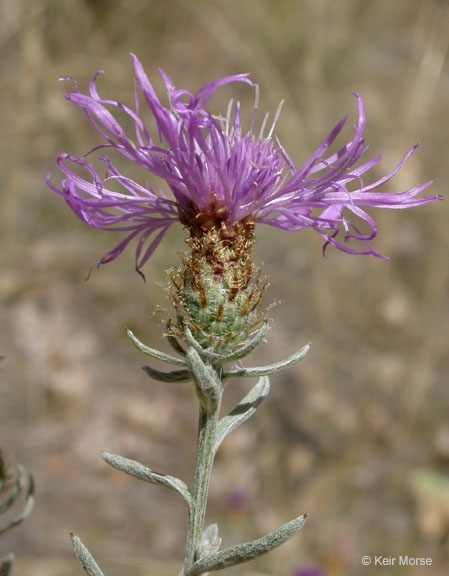
Centaurea nigrescens is native to Central and South-eastern Europe and has established and naturalized across much of the northeastern United States, as well as been introduced in Washington and Oregon in the Pacific Northwest (Grella 2012). In California, at least 29 occurrences have been recorded as of September 2025 (Calflora). It is unclear if these introductions on the west coast should be considered naturalized.
Grella, Rebecca. 2012. Invasion of Centaurea Nigrescens, Tyrol Knapweed, in North America. State University of New York at Stony Brook. https://www.proquest.com/docview/1112510493?pq-origsite=gscholar&fromop….
2025. “Calflora Taxon Report Centaurea Nigrescens”. https://www.calflora.org/app/taxon?crn=10725.
Schimpf, David, and Deborah Pomroy. 2023. “Sixteen Species New for Minnesota, Wisconsin, the Great Lakes Region, or North America”. The Great Lakes Botanist 61. Michigan Publishing.
2. Question 2
Yes
2
High
Using the climate matching tool, it is clear the species has naturalized in regions with a similar climate to California's.
2025. “Calflora Taxon Report Centaurea Nigrescens”. https://www.calflora.org/app/taxon?crn=10725.
Board, Washington State Noxious Weed. 2015. “WRITTEN FINDINGS OF THE WASHINGTON STATE NOXIOUS WEED CONTROL BOARD - Centaurea Nigrescens”. https://www.nwcb.wa.gov/images/weeds/Centaurea_nigrescens-WF.pdf.
Roche, Cindy Talbott. 1992. “Short-Fringed Knapweed (Centaurea Nigrescens Willd.) in Flora of the Pacific Northwest.”
Board, Washington State Noxious Weed Control. 2025. “Vochin Knapweed Centaurea Nigrescens”. https://www.nwcb.wa.gov/weeds/vochin-knapweed.
.org, GBIF. 2025. “Centaurea Nigrescens”. https://www.gbif.org/species/3128228.
3. Question 3
Yes
2
High
The Washington State Noxious Weed Board states that the species invades pastures and natural areas, competing with native plants and forage. It is also formally considered invasive in Wisconsin and West Virginia.
Board, Washington State Noxious Weed Control. 2025. “Vochin Knapweed Centaurea Nigrescens”. https://www.nwcb.wa.gov/weeds/vochin-knapweed.
Resources, Wisconsin Department of Natural. 2025. “TYROL KNAPWEED (Centaurea Nigrescens)”. https://dnr.wisconsin.gov/topic/Invasives/fact/TyrolKnapweed.
Resources, West Virginia Department of Natural. 2025. “Invasive Plant Species of West Virginia”. http://www.wvdnr.gov/wildlife/Handout%20Invasive%20Plants%20of%20WV%202….
4. Question 4
No
0
Medium
The species is formally listed as invasive by both Wisconsin and West Virginia. It is rated as a noxious weed in Washington State, and the Washington State Noxious Weed Board describes it as being able to invade pastures and natural areas. While it has established in many US states (Grella 2012), there is little evidence it is classified as invasive in regions with a similar climate.
Grella, Rebecca. 2012. Invasion of Centaurea Nigrescens, Tyrol Knapweed, in North America. State University of New York at Stony Brook. https://www.proquest.com/docview/1112510493?pq-origsite=gscholar&fromop….
Board, Washington State Noxious Weed. 2015. “WRITTEN FINDINGS OF THE WASHINGTON STATE NOXIOUS WEED CONTROL BOARD - Centaurea Nigrescens”. https://www.nwcb.wa.gov/images/weeds/Centaurea_nigrescens-WF.pdf.
Roche, Cindy Talbott. 1992. “Short-Fringed Knapweed (Centaurea Nigrescens Willd.) in Flora of the Pacific Northwest.”
Board, Washington State Noxious Weed Control. 2025. “Vochin Knapweed Centaurea Nigrescens”. https://www.nwcb.wa.gov/weeds/vochin-knapweed.
Resources, Wisconsin Department of Natural. 2025. “TYROL KNAPWEED (Centaurea Nigrescens)”. https://dnr.wisconsin.gov/topic/Invasives/fact/TyrolKnapweed.
5. Question 5
Yes
1
Very High
There are multiple species of Centaurea rated as invasive in California, including Centaurea calcitrapa, C. diffusa, C. diluta, C. jacea ssp. pratensis, C. melitensis, C. solstitialis, C. stoebe ssp. micranthos, and C. virgata ssp. squarrosa.
Moroney, Jolene, and Philip Rundel. 2013. “Abundance and Dispersion of the Invasive Mediterranean Annual, Centaurea Melitensis in Its Native and Non-Native Ranges”. Biological Invasions 15. Springer: 495-507.
Maddox, Donald, Aubrey Mayfield, and Noah Poritz. 1985. “Distribution of Yellow Starthistle (Centaurea Solstitialis) and Russian Knapweed (Centaurea Repens)”. Weed Science 33. Cambridge University Press: 315-27.
“The Cal-IPC Inventory”. 2025. Berkeley, CA: California Invasive Plant Council. https://www.cal-ipc.org/plants/inventory/.
6. Question 6
No
0
High
Climate matching tool shows that the majority of occurrences do not fall within a similar climate to that of California.
Cal-IPC Climate Match Tool. 2025. Cal-IPC. https://weedmap.cal-ipc.org/climatematch/?areaType=states&areaList%5B%5….
7. Question 7
Yes
1
Medium
The Washington State Noxious Weed Board states that the species invades natural areas and competes with native plant species. Wisconsin Department of Natural Resources reports the species aggressively outcompetes desired vegetation, reducing overall biodiversity and forage quality.
Board, Washington State Noxious Weed Control. 2025. “Vochin Knapweed Centaurea Nigrescens”. https://www.nwcb.wa.gov/weeds/vochin-knapweed.
Resources, Wisconsin Department of Natural. 2025. “TYROL KNAPWEED (Centaurea Nigrescens)”. https://dnr.wisconsin.gov/topic/Invasives/fact/TyrolKnapweed.
8. Question 8
No
0
Low
No evidence is available. Given the native and invaded range of the species in more temperate regions, it seems unlikely to promote wildfires.
Grella, Rebecca. 2012. Invasion of Centaurea Nigrescens, Tyrol Knapweed, in North America. State University of New York at Stony Brook. https://www.proquest.com/docview/1112510493?pq-origsite=gscholar&fromop….
9. Question 9
Yes
1
Medium
The Washington State Noxious Weed Board and Wisconsin Department of Natural Resources reports the species invades pastures, and in Wisconsin it is noted to reduce forage quality. The species is also addressed in the book Noxious Range Weeds (Roche & Roche 2021).
Roche, Ben, and Cindy Talbott Roche. 2021. “Identification, Introduction, Distribution, Ecology, and Economics of Centaurea Species”. CRC Press. https://www.taylorfrancis.com/chapters/edit/10.1201/9780429046483-28/id….
Board, Washington State Noxious Weed. 2015. “WRITTEN FINDINGS OF THE WASHINGTON STATE NOXIOUS WEED CONTROL BOARD - Centaurea Nigrescens”. https://www.nwcb.wa.gov/images/weeds/Centaurea_nigrescens-WF.pdf.
Board, Washington State Noxious Weed Control. 2025. “Vochin Knapweed Centaurea Nigrescens”. https://www.nwcb.wa.gov/weeds/vochin-knapweed.
Resources, Wisconsin Department of Natural. 2025. “TYROL KNAPWEED (Centaurea Nigrescens)”. https://dnr.wisconsin.gov/topic/Invasives/fact/TyrolKnapweed.
10. Question 10
No
0
Low
Other species in this genus such as Centaurea solstitialis and Centaurea calcitrapa are known to produce dense stands that impact the movement of livestock. While This species is similar in growth habit and possesses spines, there is no available evidence to draw a similar conclusion for this species.
No references cited.
11. Question 11
Yes
1
High
The species primarily grows from seed but is capable of spreading vegetatively through rhizomes (Grella 2012). Roché (1992) reports that gardeners will propagate plants by root division.
Grella, Rebecca. 2012. Invasion of Centaurea Nigrescens, Tyrol Knapweed, in North America. State University of New York at Stony Brook. https://www.proquest.com/docview/1112510493?pq-origsite=gscholar&fromop….
Roche, Cindy Talbott. 1992. “Short-Fringed Knapweed (Centaurea Nigrescens Willd.) in Flora of the Pacific Northwest.”
12. Question 12
No
0
Medium
The species primarily grows from seed but is capable of spreading vegetatively through rhizomes (Grella 2012). Roché (1992) reports that gardeners will propagate plants by root division.
Grella, Rebecca. 2012. Invasion of Centaurea Nigrescens, Tyrol Knapweed, in North America. State University of New York at Stony Brook. https://www.proquest.com/docview/1112510493?pq-origsite=gscholar&fromop….
Roche, Cindy Talbott. 1992. “Short-Fringed Knapweed (Centaurea Nigrescens Willd.) in Flora of the Pacific Northwest.”
13. Question 13
Yes
1
Very High
The species primarily grows from seed, which germinate in spring and summer.
Grella, Rebecca. 2012. Invasion of Centaurea Nigrescens, Tyrol Knapweed, in North America. State University of New York at Stony Brook. https://www.proquest.com/docview/1112510493?pq-origsite=gscholar&fromop….
14. Question 14
Yes
1
High
Grella (2012) reports that plants produce as many as 50 flowering stems, with each stem producing either solitary flower heads or clusters of 2-3. Each flowerhead can produce up to 25 seeds. Therefore the maximum number of seeds produced in a year could be estimated at 3,750, assuming a plant is capable of producing 50 flowering stems each with 3 flower heads. Even if each flower stem produced a solitary flower, the estimated number of seeds produced would be 1,250.
Grella, Rebecca. 2012. Invasion of Centaurea Nigrescens, Tyrol Knapweed, in North America. State University of New York at Stony Brook. https://www.proquest.com/docview/1112510493?pq-origsite=gscholar&fromop….
15. Question 15
Yes
1
High
Grella (2012) reported germination rates ranging from 35-40% in seed from the native range of the species and 57-70% in the introduced range. While this was from a laboratory based study, it seems likely that significant germination would occur given these data.
Grella, Rebecca. 2012. Invasion of Centaurea Nigrescens, Tyrol Knapweed, in North America. State University of New York at Stony Brook. https://www.proquest.com/docview/1112510493?pq-origsite=gscholar&fromop….
16. Question 16
Yes
1
Very High
Grella (2012) reports that seeds germinate in both spring and summer. During the juvenile stage, plants form a rosette with a central crown and may flower in their first year. The species can overwinter as a rosette and bolt the following spring, producing an upright stem with numerous spreading branches. Flowering and fruiting occur from mid to late summer, after which plants die back to the ground by late fall.
Grella, Rebecca. 2012. Invasion of Centaurea Nigrescens, Tyrol Knapweed, in North America. State University of New York at Stony Brook. https://www.proquest.com/docview/1112510493?pq-origsite=gscholar&fromop….
17. Question 17
Yes
1
Medium
The species produces one seed crop per year, but the flowering/seed-set period can extend for several months (Grella 2012). Roché (1992) reported plants release seed from August through winter. Hitchcock et al. (1955) notes that plants flower from July into fall.
Grella, Rebecca. 2012. Invasion of Centaurea Nigrescens, Tyrol Knapweed, in North America. State University of New York at Stony Brook. https://www.proquest.com/docview/1112510493?pq-origsite=gscholar&fromop….
Roche, Cindy Talbott. 1992. “Short-Fringed Knapweed (Centaurea Nigrescens Willd.) in Flora of the Pacific Northwest.”
Hitchcock, Leo, Arthur Cronquist, Marion Ownbey, and JW Thompson. 1955. “Vascular Plants of the Pacific Northwest. Part 5; Compositae”.
18. Question 18
No
0
Medium
Seeds lack a pappus and generally fall near the parent plant (Roche 1992), and there does not appear to be evidence that long-distance dispersal is common. However, long-distance dispersal could occur in some instances through seeds adhering to the fur or wool of animals or by being transported through their digestive tracts.
Roche, Cindy Talbott. 1992. “Short-Fringed Knapweed (Centaurea Nigrescens Willd.) in Flora of the Pacific Northwest.”
19. Question 19
No
0
Medium
Seeds lack a pappus and generally fall near the parent plant (Roche 1992), and there does not appear to be evidence of long-distance dispersal.
Roche, Cindy Talbott. 1992. “Short-Fringed Knapweed (Centaurea Nigrescens Willd.) in Flora of the Pacific Northwest.”
20. Question 20
Yes
1
High
The species very commonly occurs along roadsides, suggesting spread by vehicles and human activity (Roche 1992). Original invasion routes are thought to have been facilitated by rail systems (Grella 2012). The Wisconsin Department of Natural Resources reports the species is easily transported long distances through human activity, with the agency's evaluation of the species stating it "can be spread in contaminated hay or seed mixes, also by mowing equipment."
Grella, Rebecca. 2012. Invasion of Centaurea Nigrescens, Tyrol Knapweed, in North America. State University of New York at Stony Brook. https://www.proquest.com/docview/1112510493?pq-origsite=gscholar&fromop….
Roche, Cindy Talbott. 1992. “Short-Fringed Knapweed (Centaurea Nigrescens Willd.) in Flora of the Pacific Northwest.”
Resources, Wisconsin Department of Natural. 2025. “TYROL KNAPWEED (Centaurea Nigrescens)”. https://dnr.wisconsin.gov/topic/Invasives/fact/TyrolKnapweed.
Total PRE Score
15
20
73