Main navigation

  • Home
  • About
    • Methodology
    • History of PRE
  • Evaluations
  • Plants
  • Organizations
  • Community
  • Projects

User account menu

  • Log in
PRE — Plant Risk Evaluator

Ulmus pumila -- Nevada

Evaluation Summary


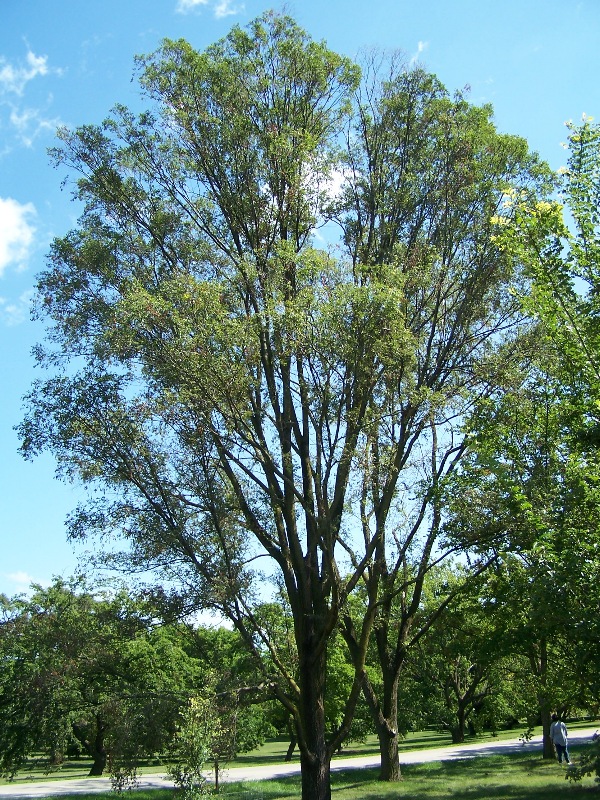
photo by Wikipedia

Evaluation Date:  2026-01-29

Screener:  Oscar Hernandez
 
Plant:  Ulmus pumila
Common Name(s):
Siberian Elm

State:  Nevada

PRE Score:  16
Questions Answered:  20
Screener Confidence (%):  82

Executive Summary

An executive summary hasn't been written yet.

Climate Matching Map

https://weedmap.cal-ipc.org/climatematch/?areaType=states&areaList%5B%5D=32&map…
Attachment Size
ulmus_pumila-nevada-20260129.pdf (1.16 MB) 1.16 MB

1. Question 1

Yes
1
Very High
Ulmus pumila is native to Northern China, Eastern Siberia, Manchuria, and Korea (USDA, 2017). It was introduced as an ornamental in North America in the 1860s. It has since become naturalized throughout the United States, lower parts of Canada, and Argentina (CAL-IPC, 2026) (Hirsch, 2010). Ulmus pumila has been noted to invade pastures, roadsides, and prairies throughout the Midwest and Great Plains regions of the United States and is considered an invasive tree in 41 of the United States (Zalapa et al. 2010).
Zalapa, Juan E., Johanne Brunet, and Raymond P. Guries. 2010. “The Extent of Hybridization and Its Impact on the Genetic Diversity and Population Structure of an Invasive Tree, Ulmus Pumila (Ulmaceae)”. Evolutionary Applications 3: 157–168. doi:10.1111/j.1752-4571.2009.00106.x.
Hirsch, Heidi, and Isabell Hensen. 2010. “Investigations on the Invasion Success of Ulmus Pumila L. In North America and Argentina.”
“Cal-IPC Climate Match Tool - Ulmus Pumila - Nevada”. 2026. https://weedmap.cal-ipc.org/climatematch/.
“Siberian Elm Ulmus Pumila L.doc - Siberian_elm.Pdf”. 2017. https://www.fs.usda.gov/naspf/resources/invasive-plants-fact-sheet-sibe….

2. Question 2

Yes
2
Very High
Ulmus pumila has become naturalized in areas that match Nevada's climate including Texas, Utah, and New Mexico where the species is listed as a Class C noxious weed (TexasInvasives, 2024)(Beck, Wanstall, 2020)(Christensen, 1964). Additionally, Ulmus pumila has been recorded to have naturalized in Mono county of California which also happens to match Nevada climate (England, 2018).
“Texas Invasives Ulmus Pumila”. n.d. http://texasinvasives.org/plant_database/detail.php?symbol=ULPU.
Beck, L, and J Wanstall. 2020. “Noxious and Troublesome Weeds of New Mexico” 2022. Las Cruces, NM: College of Agricultural, Consumer and Environmental Sciences. New Mexico State University. https://pubs.nmsu.edu/_circulars/CR698/$\#$.
Christensen, Earl. 1964. “The Recent Naturalization of Siberian Elm (ulmus Pumila L.) in Utah”. The Great Basin Naturalist 24. Monte L. Bean Life Science Museum, Brigham Young University: 103-6. https://www.jstor.org/stable/41711107.
England, Joy. 2018. “Vascular Flora of the Upper Rock Creek Watershed, Eastern Sierra Nevada, California”. Aliso: A Journal of Systematic and Floristic Botany 36: 47-81. doi:10.5642/aliso.20193602.02.

3. Question 3

Yes
2
Very High
Ulmus pumila is known as an invasive plant in the United states, being listed by law in Arizona, New Mexico, Colorado, Wisconsin, and Maine. This species is drought and cold resistant, allowing them to grow in areas where other trees cannot and its relatively tall height allow it to out shade natives (Invasive.org).
“Siberian Elm (Ulmus Pumila L.) - Invasive.Org”. n.d. https://www.invasive.org/browse/subinfo.cfm?sub=3479.

4. Question 4

Yes
3
Very High
Ulmus pumila is considered invasive in areas that match Nevada's climate including Texas, Utah, and New Mexico where the species is listed as a Class C noxious weed (TexasInvasives, 2024)(Beck, Wanstall, 2020)(Christensen, 1964). Additionally, Ulmus pumila has also been recorded to have naturalized in Mono county of California which matches Nevada climate (England, 2018)(CAL-IPC, 2026).
“Cal-IPC Climate Match Tool - Ulmus Pumila - Nevada”. 2026. https://weedmap.cal-ipc.org/climatematch/.
Christensen, Earl. 1964. “The Recent Naturalization of Siberian Elm (ulmus Pumila L.) in Utah”. The Great Basin Naturalist 24. Monte L. Bean Life Science Museum, Brigham Young University: 103-6. https://www.jstor.org/stable/41711107.
Beck, L, and J Wanstall. 2020. “Noxious and Troublesome Weeds of New Mexico” 2022. Las Cruces, NM: College of Agricultural, Consumer and Environmental Sciences. New Mexico State University. https://pubs.nmsu.edu/_circulars/CR698/$\#$.
“Texas Invasives Ulmus Pumila”. n.d. http://texasinvasives.org/plant_database/detail.php?symbol=ULPU.
England, Joy. 2018. “Vascular Flora of the Upper Rock Creek Watershed, Eastern Sierra Nevada, California”. Aliso: A Journal of Systematic and Floristic Botany 36: 47-81. doi:10.5642/aliso.20193602.02.

5. Question 5

No
0
Medium
Some species of the same genus such as Ulmus parvifolia and Ulmus procera are also considered invasive but not in climates that match Nevada (Invasive.org)(CAL-IPC, 2026).
“Siberian Elm (Ulmus Pumila L.) - Invasive.Org”. n.d. https://www.invasive.org/browse/subinfo.cfm?sub=3479.
“Cal-IPC Climate Match Tool - Ulmus Pumila - Nevada”. 2026. https://weedmap.cal-ipc.org/climatematch/.

6. Question 6

No
0
Very High
Ulmus pumila is native to North Asia and is naturalized across most of the USA and lower Canada. The majority of its most concentrated populations have been recorded outside of a climate matching that of Nevada (CAL-IPC, 2026).
“Cal-IPC Climate Match Tool - Ulmus Pumila - Nevada”. 2026. https://weedmap.cal-ipc.org/climatematch/.

7. Question 7

Yes
1
Very High
Siberian elm is an invasive tree that can form dense thickets that allow it to both shade and crowd out native plants (Hirsch, 2010)(Texas Invasives, 2024)(Invasive.org).
Hirsch, Heidi, and Isabell Hensen. 2010. “Investigations on the Invasion Success of Ulmus Pumila L. In North America and Argentina.”
“Texas Invasives Ulmus Pumila”. n.d. http://texasinvasives.org/plant_database/detail.php?symbol=ULPU.
“Siberian Elm (Ulmus Pumila L.) - Invasive.Org”. n.d. https://www.invasive.org/browse/subinfo.cfm?sub=3479.

8. Question 8

No
0
Low
Ulmus pumila is noted to be somewhat resistant to fire, often surviving prescribed burns and continuing to grow from the roots (USDA, 2017). It should be noted that Ulmus pumila significantly contributes to woody litter due to the brittle nature of it's branches (City of Louisville, 2024).
“Field Guide for Managing Siberian Elm in the Southwest”. 2017. USDA.
Louisville, City of. 2024. “Upcoming Removal of Siberian Elm Trees on North Open Space \textbar News \textbar City of Louisville, CO”. https://www.louisvilleco.gov/Home/Components/News/News/7210/8566?arch=1.

9. Question 9

Yes
1
Medium
There does not seem to be evidence Ulmus pumila being directly harmful to animals/fish. However, because this species forms dense thickets that both shade and crowd out native plants, grazing systems are negatively impacted(Hirsch, 2010)(Invasive.org)(Texas Invasives, 2024).
“Siberian Elm (Ulmus Pumila L.) - Invasive.Org”. n.d. https://www.invasive.org/browse/subinfo.cfm?sub=3479.
“Texas Invasives Ulmus Pumila”. n.d. http://texasinvasives.org/plant_database/detail.php?symbol=ULPU.
Hirsch, Heidi, and Isabell Hensen. 2010. “Investigations on the Invasion Success of Ulmus Pumila L. In North America and Argentina.”

10. Question 10

Yes
1
High
Ulmus pumila is an invasive tree that can form dense thickets that allow it to both shade and crowd out native plants (Hirsch, 2010)(Texas Invasives, 2024)(Invasive.org). The Siberian elm tree can grow up to 70 ft in height and so it can reasonably be assumed that these dense thickets could block or slow the movement of animals, livestock, and humans.
Hirsch, Heidi, and Isabell Hensen. 2010. “Investigations on the Invasion Success of Ulmus Pumila L. In North America and Argentina.”
“Siberian Elm (Ulmus Pumila L.) - Invasive.Org”. n.d. https://www.invasive.org/browse/subinfo.cfm?sub=3479.
“Texas Invasives Ulmus Pumila”. n.d. http://texasinvasives.org/plant_database/detail.php?symbol=ULPU.

11. Question 11

No
0
High
Ulmus pumila reproduces primarily by seed although there is sometimes growth from the root crown. (Beck, Wanstall, 2020)(Invasive.org). There is no other significant means of reproductive vegetative spread.
Beck, L, and J Wanstall. 2020. “Noxious and Troublesome Weeds of New Mexico” 2022. Las Cruces, NM: College of Agricultural, Consumer and Environmental Sciences. New Mexico State University. https://pubs.nmsu.edu/_circulars/CR698/$\#$.
“Siberian Elm (Ulmus Pumila L.) - Invasive.Org”. n.d. https://www.invasive.org/browse/subinfo.cfm?sub=3479.

12. Question 12

No
0
High
Ulmus Pumila reproduces primarily by seed although there is sometimes growth from the root crown(Beck, Wanstall, 2020)(Invasive.org). There is no mention of this species being able to grow from naturally detached fragments.
Beck, L, and J Wanstall. 2020. “Noxious and Troublesome Weeds of New Mexico” 2022. Las Cruces, NM: College of Agricultural, Consumer and Environmental Sciences. New Mexico State University. https://pubs.nmsu.edu/_circulars/CR698/$\#$.
“Siberian Elm (Ulmus Pumila L.) - Invasive.Org”. n.d. https://www.invasive.org/browse/subinfo.cfm?sub=3479.

13. Question 13

Yes
1
High
Ulmus Pimila reproduces primarily by viable seed although there is sometimes growth from the root crown(Beck, Wanstall, 2020)(Invasive.org). An abundance of seeds are produced in early spring and spread by wind (Texas Invasives, 2024).
“Texas Invasives Ulmus Pumila”. n.d. http://texasinvasives.org/plant_database/detail.php?symbol=ULPU.
Beck, L, and J Wanstall. 2020. “Noxious and Troublesome Weeds of New Mexico” 2022. Las Cruces, NM: College of Agricultural, Consumer and Environmental Sciences. New Mexico State University. https://pubs.nmsu.edu/_circulars/CR698/$\#$.
“Siberian Elm (Ulmus Pumila L.) - Invasive.Org”. n.d. https://www.invasive.org/browse/subinfo.cfm?sub=3479.

14. Question 14

Yes
1
High
Jacquart et al. (2007) states that “even small trees can have >1,000 seeds.” This claim seems reasonable for a tree with such small seeds and appears to be loosely supported by the USDA which has the Fruit/Seed Abundace level listed as "high"(USDA).
Jacquart, E, P O’Connor, K Collins, D Gorden, J Kiefer, and K Howe. 2007. “Assessment of Invasive Species in Indiana’s Natural Areas: Siberian Elm (Ulmus Pumila)”. Indiana Department of Natural Resources, 9 pp. https://www.in.gov/dnr/files/Official_Siberian_Elm_Assessment.pdf.
“Ulmus Pumila L”. n.d. Washington, DC: U.S. Department of Agriculture. https://plants.usda.gov/home/plantProfile?symbol=ulpu.

15. Question 15

Yes
1
Very High
In one experiment studying germination and growth patterns of Ulmus pumila in Central Asia, germination rates of 48-74% were reported (depending on substrate type)(Wesche, 2011). In another experimental study comparing germination in native and non-native populations, 80.6% of tested seeds were germinated with another 2.1 % of non-germinated seed still viable. These germination rates were not confirmed to be observed in the next growing season.(Hirsch, 2012).
Hirsch, H, C Wypior, H von Wehrden, K Wesche, D Renison, and I Hensen. 2012. “Germination Performance of Native and Non-Native Ulmus Pumila Populations”. NeoBiota 15: 53–68. https://ri.conicet.gov.ar/bitstream/handle/11336/42852/CONICET_Digital_…\&isAllowed=y.
Wesche, K, D Walther, H von Wehrden, and I Hensen. 2011. “Trees in the Desert: Reproduction and Genetic Structure of Fragmented Ulmus Pumila Forests in Mongolian Drylands”. Flora 206: 91-99.

16. Question 16

No
0
High
As a woody species, Ulmus pumila is noted to produce viable seed after 10 years at the very soonest (Zalapa, 2010)
Zalapa, Juan E., Johanne Brunet, and Raymond P. Guries. 2010. “The Extent of Hybridization and Its Impact on the Genetic Diversity and Population Structure of an Invasive Tree, Ulmus Pumila (Ulmaceae)”. Evolutionary Applications 3: 157–168. doi:10.1111/j.1752-4571.2009.00106.x.

17. Question 17

No
0
Medium
USDA Plants lists that this species begins seed/flower development in spring and also ends that process in spring(USDA). This is supported by Jepson eFlora which states the flowering time of this plant from March to April(Jepson, 2012).
Whittemore, A. 2012. “Ulmus Pumila” 2022. Jepson Flora Project (eds.) Jepson eFlora. https://ucjeps.berkeley.edu/eflora/eflora_display.php?tid=47484.
“Ulmus Pumila L”. n.d. Washington, DC: U.S. Department of Agriculture. https://plants.usda.gov/home/plantProfile?symbol=ulpu.

18. Question 18

No
0
High
Siberian elm seed is primarily dispersed via wind(Hirsch, 2012)(Invasive.org). There is no evidence to suggest that mammals or birds are a common form of long distance dispersal.
Hirsch, H, C Wypior, H von Wehrden, K Wesche, D Renison, and I Hensen. 2012. “Germination Performance of Native and Non-Native Ulmus Pumila Populations”. NeoBiota 15: 53–68. https://ri.conicet.gov.ar/bitstream/handle/11336/42852/CONICET_Digital_…\&isAllowed=y.
“Siberian Elm (Ulmus Pumila L.) - Invasive.Org”. n.d. https://www.invasive.org/browse/subinfo.cfm?sub=3479.

19. Question 19

Yes
1
Very High
Ulmus pumila seed is primarily dispersed via wind(Hirsch, 2012)(Invasive.org). The wind is able to carry both seeds and pollen to distant areas which results in high levels of mixing(Zalapa, 2010).
Zalapa, Juan E., Johanne Brunet, and Raymond P. Guries. 2010. “The Extent of Hybridization and Its Impact on the Genetic Diversity and Population Structure of an Invasive Tree, Ulmus Pumila (Ulmaceae)”. Evolutionary Applications 3: 157–168. doi:10.1111/j.1752-4571.2009.00106.x.
Hirsch, H, C Wypior, H von Wehrden, K Wesche, D Renison, and I Hensen. 2012. “Germination Performance of Native and Non-Native Ulmus Pumila Populations”. NeoBiota 15: 53–68. https://ri.conicet.gov.ar/bitstream/handle/11336/42852/CONICET_Digital_…\&isAllowed=y.
“Siberian Elm (Ulmus Pumila L.) - Invasive.Org”. n.d. https://www.invasive.org/browse/subinfo.cfm?sub=3479.

20. Question 20

Yes
1
Medium
The U.S. Forest Service’s ‘Field Guide for Managing Siberian Elm in the Southwest’ states that "seed may be carried long distances by adhering to surfaces and undercarriages of logging equipment and vehicles."(USDA, 2017) No other sources regarding this form of dispersal could be found and the frequency of which this occurs is not mentioned.
“Field Guide for Managing Siberian Elm in the Southwest”. 2017. USDA.

Evaluation Notes

Ulmus pumila, also known as Siberian elm, is native to Northern Asia. The tree has since naturalized in a variety of regions and is considered invasive in many of them. It has many invasive qualities such as drought resistance, an extensive root system, and the ability to create dense thickets that outcompete natives. Ulmus pumila is considered invasive in areas that match Nevada's climate including Texas, Utah, and New Mexico where the species is listed as a Class C noxious weed. Additionally, Ulmus pumila has also been recorded to have naturalized in Mono county of California which  matches Nevada climate. The plant reproduces primarily by seed, which can be transported long-distances by wind and vehicles. Ulmus pumila already has dispersed populations throughout Nevada. 

Total PRE Score

16
20
82

PRE Score Legend

The PRE Score is calculated by adding the point totals for each (answered) question.

< 13 : Low Potential Risk
13 - 15 : Moderate Potential Risk
> 15 : High Potential Risk

Questions Answered Legend

It is important to answer at least 16 questions to consider a PRE Score as "valid".

≥ 16 : Valid (80% or more questions answered)
≤ 15 : Invalid (not enough questions answered)

Evaluation Credits and Citation


Screener:  Oscar Hernandez


Below is a recommend citation when referencing this evaluation in other works:

Hernandez, Oscar. "Ulmus pumila -- Nevada" Plant Risk Evaluator (PRE) published 2026-01-29 https://pretool.org/evaluations/5491


Please cite this evaluation. We need your support here!

PRE Evaluations take a long time to research, so please credit this site and evaluation appropriately.


Evaluation Reviewers

Jake Dick reviewed on 2026-10-15
Scott Heacox reviewed on 2026-07-10
Alessandro Ossola reviewed on 2026-07-02
Jutta Burger reviewed on 2026-06-26


Associated Project

2023-2025 Western IPM Project

This project intends to support the expanded use of the online PRE tool to more Western States and nations, and to explore the use of the PRE results for each partner region. Along with the direct benefit from the plant assessments, this project will also provide a platform through which to collaborate on a range of efforts related to preventing introduction of invasive plants through horticulture. Each partner can share their expertise on effort such as providing information on safe landscaping alternatives, surveying nurseries for data on what is being sold, comparing species priorities.


Associated Organizations, Agencies, and Institutions

Nevada Department of Agriculture
California Invasive Plant Council (Cal-IPC)


Download PDF


Evaluation PDF... file not found.

Climate Matching PDF


Copyright © 2026 PRETool.org - All rights reserved