Climate Matching Map
| Attachment | Size |
|---|---|
| climatematch-lathyrus_latifolius-nevada-20260128.pdf (1.14 MB) | 1.14 MB |
1. Question 1
Yes
1
Very High
Lathyrus latifolius is native to southern Europe and northern Africa (Randall 2017, Burnham 2013). It has naturalized extensively across North America, as well as temperate parts of South America, Australia, and New Zealand. (Climate Match Map, Randall 2017, Missouri Botanical Garden).
Burnham, Robyn J. 2013. “Censusing Lianas In Mesic Biomes of Eastern RegionS: Lathyrus Latifolius” 2020. http://climbers.lsa.umich.edu/?p=282.
Randall, R. P. 2017. “A Global Compendium of Weeds. Third Edition”. https://www.researchgate.net/publication/313645439_A_Global_Compendium_….
Garden, Missouri Botanical. n.d. “Lathyrus Latifolius”. https://www.missouribotanicalgarden.org/PlantFinder/PlantFinderDetails….
2. Question 2
Yes
2
High
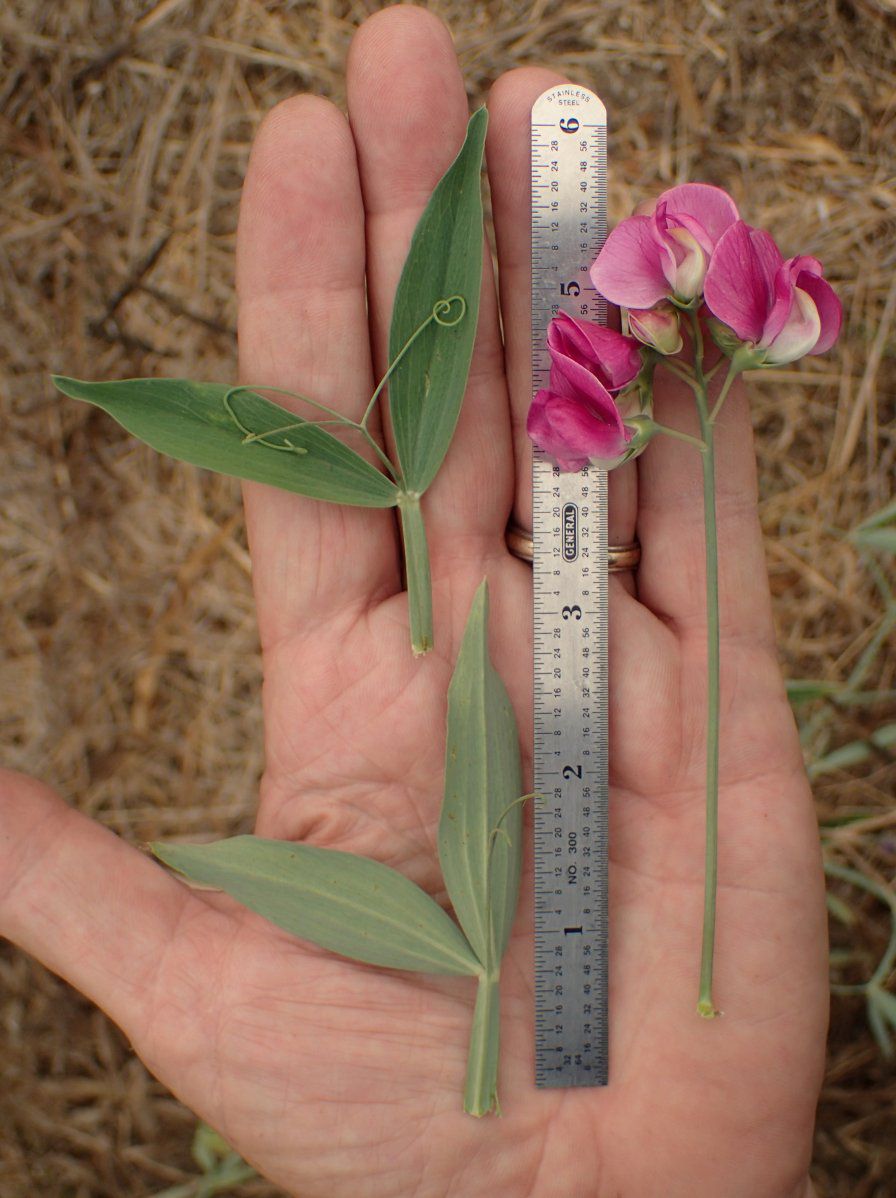
While relatively rare, Lathyrus latifolius appears to occasionally naturalize around the margins of areas matching the climate of Nevada, such as the Great Basin and the relatively arid eastern half of Washington state (see Climate Match Map).
No references cited.
3. Question 3
Yes
2
Very High
This species is considered invasive in a variety of countries across the world, such as the United States, New Zealand, Australia, Serbia, Denmark, Canada, Mexico, Japan, and Argentina (Randall 2017). Within the United States, it is classified as a noxious weed in Oregon (Brakie 2020).
Randall, R. P. 2017. “A Global Compendium of Weeds. Third Edition”. Dept. of Agriculture and Food, Western Australia. https://www.researchgate.net/publication/313645439_A_Global_Compendium_….
Brakie, M. 2020. “Plant Guide for Perennial Pea (Lathyrus Latifolius)”. https://www.nrcs.usda.gov/plantmaterials/etpmcpg13664.pdf.
4. Question 4
Yes
3
Very High
Lathyrus latifolius appears to be relatively rare in climates matching Nevada, preferring wetter areas, however it does appear in some areas along the margin of this climate in western US states such as California, Washington, and Oregon. I could not find evidence that it is considered invasive in California or Washington, but it is classified as a noxious weed in Oregon (Brakie 2020).
Brakie, M. 2020. “Plant Guide for Perennial Pea (Lathyrus Latifolius)”. https://www.nrcs.usda.gov/plantmaterials/etpmcpg13664.pdf.
5. Question 5
No
0
High
While there are a number of nonnative Lathyrus species present in the US (e.g. L. angulatus, L. hirsutus, and L. odoratus in California), I could find no indication that these species are considered invasive (Calflora). Regardless, Lathyrus generally do not occur in climates matching Nevada (Randall 2017, Climate Match Map).
Randall, R. P. 2017. “A Global Compendium of Weeds. Third Edition”. Dept. of Agriculture and Food, Western Australia. https://www.researchgate.net/publication/313645439_A_Global_Compendium_….
6. Question 6
No
0
High
Lathyus latifolius is primarily found in a Mediterranean climate and does not appear to tolerate the desert conditions that characterize most of Nevada (Randall 2017, Climate Match Map).
Randall, R. P. 2017. “A Global Compendium of Weeds. Third Edition”. Dept. of Agriculture and Food, Western Australia. https://www.researchgate.net/publication/313645439_A_Global_Compendium_….
7. Question 7
Yes
1
High
Lathyrus latifolius is known to grow as a ground cover (Brakie 2020, North Carolina State University Extension). It has also been reported to overtop and smother other species, leading to a reduction in native plant cover in Oregon (Brakie 2020, Oregon Department of Agriculture 2020).
Agriculture, Oregon Dept of. 2020. “Oregon Department of Agriculture ‘B’ Rated Weeds: Perennial Peavine”. https://www.oregon.gov/oda/Documents/Publications/Weeds/PerennialPeavin….
Extension, North Carolina State University. 2026. “Lathyrus Latifolius”. Accessed January 28. https://plants.ces.ncsu.edu/plants/lathyrus-latifolius/.
Brakie, M. 2020. “Plant Guide for Perennial Pea (Lathyrus Latifolius)”. https://www.nrcs.usda.gov/plantmaterials/etpmcpg13664.pdf.
8. Question 8
No
0
Medium
I could find no indication that this species significantly alters fire regimes, and the fact that this plant is a low-growing, non-woody herb decreases the likelihood that it would notably increase fire risk.
No references cited.
9. Question 9
Yes
1
Very High
This species is known to be toxic to animals when ingested, causing a condition known as "lathyrism" (Brakie 2020, North Carolina State University Extension, Ressler et al. 1961, Tull 1999).
Ressler, Charlotte, Paul Redstone, and Renée Erenberg. 1961. “Isolation and Identification of a Neuroactive Factor from Lathyrus Latifolius”. Science 134. American Association for the Advancement of Science: 188-90.
Tull, Delena. 1999. Edible and Useful Plants of Texas and the Southwest: A Practical Guide. University of Texas Press.
Extension, North Carolina State University. 2026. “Lathyrus Latifolius”. Accessed January 28. https://plants.ces.ncsu.edu/plants/lathyrus-latifolius/.
Brakie, M. 2020. “Plant Guide for Perennial Pea (Lathyrus Latifolius)”. https://www.nrcs.usda.gov/plantmaterials/etpmcpg13664.pdf.
10. Question 10
Yes
1
Low
I could not find any discussion of how/if this species impedes animal movement. However, unless it is able to find a structure to climb, this species spread relatively low to the ground, at about 4-8" in height (Missouri Botanical Garden). It's short stature is unlikely to cause a significant impediment to large animal/livestock or human movement, however tangled mats of this vine could conceivably pose a barrier to smaller animals such as rodents, reptiles, and birds.
Garden, Missouri Botanical. n.d. “Lathyrus Latifolius”. https://www.missouribotanicalgarden.org/PlantFinder/PlantFinderDetails….
11. Question 11
Yes
1
Very High
This species is known to readily reproduce vegetatively via rhizomes (Hossaert-McKey and Jarry 1992, USDA).
Hossaert-McKey, M., and M. Jarry. 1992. “Spatial and Temporal Patterns of Investment in Growth and Sexual Reproduction in Two Stoloniferous Species, Lathyrus Latifolius and L. Sylvestris”. Journal of Ecology 80: 555–565. doi:10.2307/2260698.
12. Question 12
Yes
1
Medium
This species is known to reproduce vegetatively via rhizome clones. These plants naturally send out rhizome clones which can detach from the parent plant to form a new isolated individual (Hossaert-McKey and Jarry 1992). While it is well known that this species can reproduce vegetatively, I could find no information regarding the frequency at which it reproduces vegetatively versus by seed. However, USDA indicates that planting by seed is the preferred method of propogation, as rhizomes do not transplant well (Brakie 2020). The "Medium" confidence score is to reflect the uncertainty regarding frequency of vegetative reproduction as well as uncertainty about rhizome transplant viability.
Hossaert-McKey, M., and M. Jarry. 1992. “Spatial and Temporal Patterns of Investment in Growth and Sexual Reproduction in Two Stoloniferous Species, Lathyrus Latifolius and L. Sylvestris”. Journal of Ecology 80: 555–565. doi:10.2307/2260698.
Brakie, M. 2020. “Plant Guide for Perennial Pea (Lathyrus Latifolius)”. https://www.nrcs.usda.gov/plantmaterials/etpmcpg13664.pdf.
13. Question 13
Yes
1
Very High
It is reported that the best way to propagate this plant is through seed, and seed mass can reach 165 lbs/acre (Brakie 2020). They are also known grow weedy in areas after self-seeding (Missouri Botanical Garden).
Brakie, M. 2020. “Plant Guide for Perennial Pea (Lathyrus Latifolius)”. https://www.nrcs.usda.gov/plantmaterials/etpmcpg13664.pdf.
14. Question 14
No
0
High
According to Godt and Mamrick (1991), Lathyrus latifolius produces inflorescences of 4 to 14 flowers each, and each fruit contains 10 to 25 seeds. Hossaert-McKey and Jarry (1992) state that a ramet will produce between 6 and 9 inflorescences per flowering period (summer to early fall). With these figures, it is unlikely that an individual plant or ramet will produce greater than 1000 seeds per year.
Hossaert-McKey, M., and M. Jarry. 1992. “Spatial and Temporal Patterns of Investment in Growth and Sexual Reproduction in Two Stoloniferous Species, Lathyrus Latifolius and L. Sylvestris”. Journal of Ecology 80: 555–565. doi:10.2307/2260698.
Godt, Mary, and JL Hamrick. 1991. “Genetic Variation in Lathyrus Latifolius (Leguminosae)”. American Journal of Botany 78. Wiley Online Library: 1163-71.
15. Question 15
Yes
1
Medium
Estimates of germination rates is lacking, however some gardening blogs (i.e. Renee's Garden) claim a 75%-85% rate of successful germination. While Lathyrus latifolius is one of several sweet pea species mentioned, the information is not specific as to which species of sweet pea this rate refers to, or if it is relevant to all species discussed. While I was unable to find more specific estimates than this, searches of seed sellers and gardening blogs seem to mostly recommend a brief (roughly 24-hour) soaking pretreatment due to the seeds' hard coat. Brief soaking does not constitute an "infrequent environmental condition" and likely simulates the onset of the wet season.
No references cited.
16. Question 16
Yes
1
High
Information on time to flowering is lacking, however some seed companies claim 75-85 days to flowering after germination (Pine Tree Seeds). Hossaert-McKey and Jarry (1992) state that, in their experiments, ramets produced fruit in the second year, however they were unable to observe time to flowering for seedlings.
Hossaert-McKey, M., and M. Jarry. 1992. “Spatial and Temporal Patterns of Investment in Growth and Sexual Reproduction in Two Stoloniferous Species, Lathyrus Latifolius and L. Sylvestris”. Journal of Ecology 80: 555–565. doi:10.2307/2260698.
17. Question 17
No
0
Medium
Information on timing of flowering and seed production is variable, possibly owing to observations of plants growing in different parts of the world under different conditions. Brakie (2020) states this species flowers in "spring and summer", Illinois Wildflowers states they flower for about two months in the summer, Hossaert and Valero (1988) state that mature fruit are available in September and October, indicating two months of flowering, and in California they are said to flower from April to May (Steele et al. 2012) or May to September (Calflora). Most sources seem to indicate approximately two months of flowering time per year, but the "Medium" confidence is due to the lack of agreement between sources.
Hossaert-McKey, Martine, and Myriam Valero. 1988. “Effect of Ovule Position in the Pod on Patterns of Seed Formation in Two Species of Lathyrus (leguminosae: Papilionoideae)”. American Journal of Botany 75 (11): 1714-31. doi:10.1002/j.1537-2197.1988.tb11248.x.
Brakie, M. 2020. “Plant Guide for Perennial Pea (Lathyrus Latifolius)”. https://www.nrcs.usda.gov/plantmaterials/etpmcpg13664.pdf.
Steele, Kelly, and Duane Isely. 2012. “Lathyrus Latifolius (perennial Sweet Pea)”. https://ucjeps.berkeley.edu/eflora/eflora_display.php?tid=30318.
18. Question 18
No
0
Medium
While some sources claim that animals aid in dispersal (e.g. Jefferson County Noxious Weed Control Program) without offering further explanation, it is unlikely that this is a common occurrence due to the lack of physical features that would facilitate attachment to animals and also due to the known toxicity of the seeds (Brakie 2020, Ressler et al. 1961, Steele and Isely 2012). It is thought that the primary mode of dispersal is via violent dehiscence (Brakie 2020, Godt and Hamrick 1991, Hossaert and Valero 1988, Jefferson County Noxious Weed Control Program).
Ressler, Charlotte, Paul Redstone, and Renée Erenberg. 1961. “Isolation and Identification of a Neuroactive Factor from Lathyrus Latifolius”. Science 134. American Association for the Advancement of Science: 188-90.
Steele, Kelly, and Duane Isely. 2012. “Lathyrus Latifolius (perennial Sweet Pea)”. https://ucjeps.berkeley.edu/eflora/eflora_display.php?tid=30318.
Hossaert-McKey, M., and M. Jarry. 1992. “Spatial and Temporal Patterns of Investment in Growth and Sexual Reproduction in Two Stoloniferous Species, Lathyrus Latifolius and L. Sylvestris”. Journal of Ecology 80: 555–565. doi:10.2307/2260698.
Brakie, M. 2020. “Plant Guide for Perennial Pea (Lathyrus Latifolius)”. https://www.nrcs.usda.gov/plantmaterials/etpmcpg13664.pdf.
Godt, Mary, and JL Hamrick. 1991. “Genetic Variation in Lathyrus Latifolius (Leguminosae)”. American Journal of Botany 78. Wiley Online Library: 1163-71.
19. Question 19
No
0
Medium
Godt and Hamrick (1991) describe the dispersal capacity as "moderate" due to the relatively heavy weight and round shape of the seeds, allowing them to be easily moved by wind or water after violent dehiscence occurs. They cite the propensity of this species to establish on banks and roadside ditches as evidence of deposition by wind or water. However, they provided no actual evidence of post-dehiscence dispersal, and I found no other evidence of dispersal by wind or water, hence the answer of "no" for this question.
Godt, Mary, and JL Hamrick. 1991. “Genetic Variation in Lathyrus Latifolius (Leguminosae)”. American Journal of Botany 78. Wiley Online Library: 1163-71.
20. Question 20
No
0
Medium
I could find no evidence suggesting that this species is frequently spread unintentionally via anthropogenic means. Its main form of dispersal seems to be by initial explosive dehiscence, ejecting seeds up to 30 feet away, and then subsequent transport by wind and water (Hossaert and Valero 1988, Godt and Hamrick (1991) cite the propensity of this species to establish on banks and roadside ditches as evidence of deposition by wind or water, which act to collect seeds into these areas. Seed packets of this species are readily available for use as ornamentals, so the potential for contaminated seed packets exists, however it seems unlikely to happen frequently because the seeds are large and easily identifiable as a contaminant.
Godt, Mary, and JL Hamrick. 1991. “Genetic Variation in Lathyrus Latifolius (Leguminosae)”. American Journal of Botany 78. Wiley Online Library: 1163-71.
Hossaert-McKey, Martine, and Myriam Valero. 1988. “Effect of Ovule Position in the Pod on Patterns of Seed Formation in Two Species of Lathyrus (leguminosae: Papilionoideae)”. American Journal of Botany 75 (11): 1714-31. doi:10.1002/j.1537-2197.1988.tb11248.x.
Evaluation Notes
(7/10/2026) Some institutional sources (e.g. Missouri Botanic Garden) are missing in the References sections. This is due to bugs SH was experiencing when attempting to add a reference or use the References Library. SH will add these references once the bugs are resolved.
Total PRE Score
16
20
77