Climate Matching Map
| Attachment | Size |
|---|---|
| climatematch-oenothera_hispida-california-20260128.pdf (1.09 MB) | 1.09 MB |
1. Question 1
Yes
1
Very High
Oenothera hispida has become naturalized in California and is considered a noxious weed in California by CDFA. Its native range includes eastern Texas, and Oaxaca to Puebla in Mexico. It was, at some point in time, naturalized in Sevier Co. in Arkansas and Glynn Co. in Georgia, however there is no recent documentation of these naturalized occurrences.
Wagner, Warren L. 2017. “Oenothera Xenogaura”. Jepson EFlora. Jepson Flora Project (eds.). https://ucjeps.berkeley.edu/eflora/eflora_display.php?tid=89232.
Randall, R. P. 2017. “A Global Compendium of Weeds. Third Edition”. https://www.researchgate.net/publication/313645439_A_Global_Compendium_….
Kratville, David. 2021. “CDFA Weed Pest Ratings and CCR 4500 Noxious Weeds”. https://www.cdfa.ca.gov/plant/ipc/encycloweedia/pdf/CaliforniaNoxiousWe….
2026. “Oenothera Hispida in Flora of North America”. EFloras.Org. http://efloras.org/florataxon.aspx?flora_id=1&taxon_id=250130317.
2026. “Cal-IPC Climate Match Tool Oenothera Hispida in California”. https://weedmap.cal-ipc.org/climatematch/?areaType=states&areaList%5B%5….
Raven, Peter H., and David Gregory. 1972. “A Revision of the Genus Gaura (onagraceae)”. Memoirs of the Torrey Botanical Club 23. Torrey Botanical Society: 1-96. https://www.jstor.org/stable/43390647.
2. Question 2
Yes
2
Very High
Oenothera hispida has become naturalized in California and is considered invasive by CDFA, and not anywhere else, with or without a similar climate, according to the Climate Match tool. The regions in Arkansas and Georgia that it had reportedly become naturalized do not share a climate with California. A small part of this species range in central Mexico matches California's climate, but it is a fraction of the native range.
2026. “Cal-IPC Climate Match Tool Oenothera Hispida in California”. https://weedmap.cal-ipc.org/climatematch/?areaType=states&areaList%5B%5….
2026. “Oenothera Hispida in Flora of North America”. EFloras.Org. http://efloras.org/florataxon.aspx?flora_id=1&taxon_id=250130317.
2026. “Oenothera Hispida (Sweet Gaura) - Flora of the Southeastern United States”. North Carolina Botanical Garden. https://fsus.ncbg.unc.edu/main.php?pg=show-taxon-detail.php&taxonid=3787.
Raven, Peter H., and David Gregory. 1972. “A Revision of the Genus Gaura (onagraceae)”. Memoirs of the Torrey Botanical Club 23. Torrey Botanical Society: 1-96. https://www.jstor.org/stable/43390647.
Wagner, Warren L. 2017. “Oenothera Xenogaura”. Jepson EFlora. Jepson Flora Project (eds.). https://ucjeps.berkeley.edu/eflora/eflora_display.php?tid=89232.
3. Question 3
Yes
2
Medium
Oenothera hispida is considered an invasive noxious weed in North America (specifically in California) where it occurs outside its native range. CDFA lists it on the CCR 4500 list as of June 2021 within the meaning of Section 5004 of the Food and Agricultural Code, such that "“Noxious weed” means any species of plant that is, or is liable to be, troublesome, aggressive, intrusive, detrimental, or destructive to agriculture, silviculture, or important native species, and difficult to control or eradicate, which the director, by regulation, designates to be a noxious weed. In determining whether or not a species shall be designated a noxious weed for the purposes of protecting silviculture or important native plant species, the director shall not make that designation if the designation will be detrimental to agriculture."
Most other sources, however, list this species as invasive or naturalized.
Most other sources, however, list this species as invasive or naturalized.
Kratville, David. 2021. “CDFA Weed Pest Ratings and CCR 4500 Noxious Weeds”. https://www.cdfa.ca.gov/plant/ipc/encycloweedia/pdf/CaliforniaNoxiousWe….
Randall, R. P. 2017. “A Global Compendium of Weeds. Third Edition”. https://www.researchgate.net/publication/313645439_A_Global_Compendium_….
4. Question 4
Yes
3
Medium
See question 2. This species is considered invasive in California.
2026. “Cal-IPC Climate Match Tool Oenothera Hispida in California”. https://weedmap.cal-ipc.org/climatematch/?areaType=states&areaList%5B%5….
2026. “Oenothera Hispida in Flora of North America”. EFloras.Org. http://efloras.org/florataxon.aspx?flora_id=1&taxon_id=250130317.
2026. “Oenothera Hispida (Sweet Gaura) - Flora of the Southeastern United States”. North Carolina Botanical Garden. https://fsus.ncbg.unc.edu/main.php?pg=show-taxon-detail.php&taxonid=3787.
Wagner, Warren L. 2017. “Oenothera Xenogaura”. Jepson EFlora. Jepson Flora Project (eds.). https://ucjeps.berkeley.edu/eflora/eflora_display.php?tid=89232.
5. Question 5
Yes
1
Very High
Oenothera is a big, new world, genus that has a lot of introductions across the world. In Europe, at least 35 alien taxa in the family have been documented from 1780-2001.
Here, I chose to compare O. biennis and O. glazioviana for their available data and similarities in habit, habitat, and naturalized presence in California.
Oenothera biennis is native to central and eastern North America and is considered weedy worldwide. France and Spain both report O. biennis as invasive within the matching climate.
Oenothera glazioviana is commonly cultivated and distributed worldwide. The Mediterranean region in general, specifically Spain and Italy, as well as Australia all consider this species invasive and the regions in these countries it occurs share a similar climate with California.
Here, I chose to compare O. biennis and O. glazioviana for their available data and similarities in habit, habitat, and naturalized presence in California.
Oenothera biennis is native to central and eastern North America and is considered weedy worldwide. France and Spain both report O. biennis as invasive within the matching climate.
Oenothera glazioviana is commonly cultivated and distributed worldwide. The Mediterranean region in general, specifically Spain and Italy, as well as Australia all consider this species invasive and the regions in these countries it occurs share a similar climate with California.
2026. “Cal-IPC Climate Match Tool ClimateMatch Oenothera Biennis in California”. https://weedmap.cal-ipc.org/climatematch/?areaType=states&areaList%5B%5….
2026. “Cal-IPC Climate Match Tool Oenothera Glazioviana in California”. https://weedmap.cal-ipc.org/climatematch/?areaType=states&areaList%5B%5….
Hoggard, Gloria, Paul Kores, Mia Molvray, and Ronald Hoggard. 2004. “The Phylogeny of Gaura (Onagraceae) Based on ITS, ETS, AndtrnL‐F Sequence Data”. doi:10.3732/ajb.91.1.139.
Krakos, Kyra, Matthew Johnson, Peter C. Hoch, Warren L. Wagner, Pu Huang, and Peter H. Raven. 2022. “Molecular Phylogenetics Reveals Multiple Transitions to Self-Compatibility in a Primary Subclade of Oenothera (Onagraceae)1”. Annals of the Missouri Botanical Garden 107. Missouri Botanical Garden Press: 405-21. doi:10.3417/2022735.
Mihulka, Stanislav, and Petr Pyšek. 2001. “Invasion History of Oenothera Congeners in Europe: A Comparative Study of Spreading Rates in the Last 200 Years”. Journal of Biogeography 28: 597-609. doi:10.1046/j.1365-2699.2001.00574.x.
Randall, R. P. 2017. “A Global Compendium of Weeds. Third Edition”. https://www.researchgate.net/publication/313645439_A_Global_Compendium_….
Wagner, Warren L. 2017. “Oenothera Biennis”. Jepson EFlora. Jepson Flora Project (eds.). https://ucjeps.berkeley.edu/eflora/eflora_display.php?tid=34975.
Wagner, Warren L. 2017. “Oenothera Glazioviana”. Jepson EFlora. Jepson Flora Project (eds.). https://ucjeps.berkeley.edu/eflora/eflora_display.php?tid=35004.
Wagner, Warren L., Peter C. Hoch, and James Zarucchi. 2015. “The Correct Name in Oenothera for Gaura Drummondii (Onagraceae)”. PhytoKeys, 25-29. doi:10.3897/phytokeys.50.4886.
Australia, Weeds of. n.d. “Oenothera Glazioviana ”. https://keyserver.lucidcentral.org/weeds/data/media/Html/oenothera_glaz….
6. Question 6
No
0
High
Oenothera hispida is primarily found within its native range in Texas and Mexico, and primarily within regions thereof that do not match the climate in California.
2026. “Cal-IPC Climate Match Tool Oenothera Hispida in California”. https://weedmap.cal-ipc.org/climatematch/?areaType=states&areaList%5B%5….
2026. “Oenothera Hispida in Flora of North America”. EFloras.Org. http://efloras.org/florataxon.aspx?flora_id=1&taxon_id=250130317.
Wagner, Warren L. 2017. “Oenothera Xenogaura”. Jepson EFlora. Jepson Flora Project (eds.). https://ucjeps.berkeley.edu/eflora/eflora_display.php?tid=89232.
7. Question 7
Yes
1
Medium
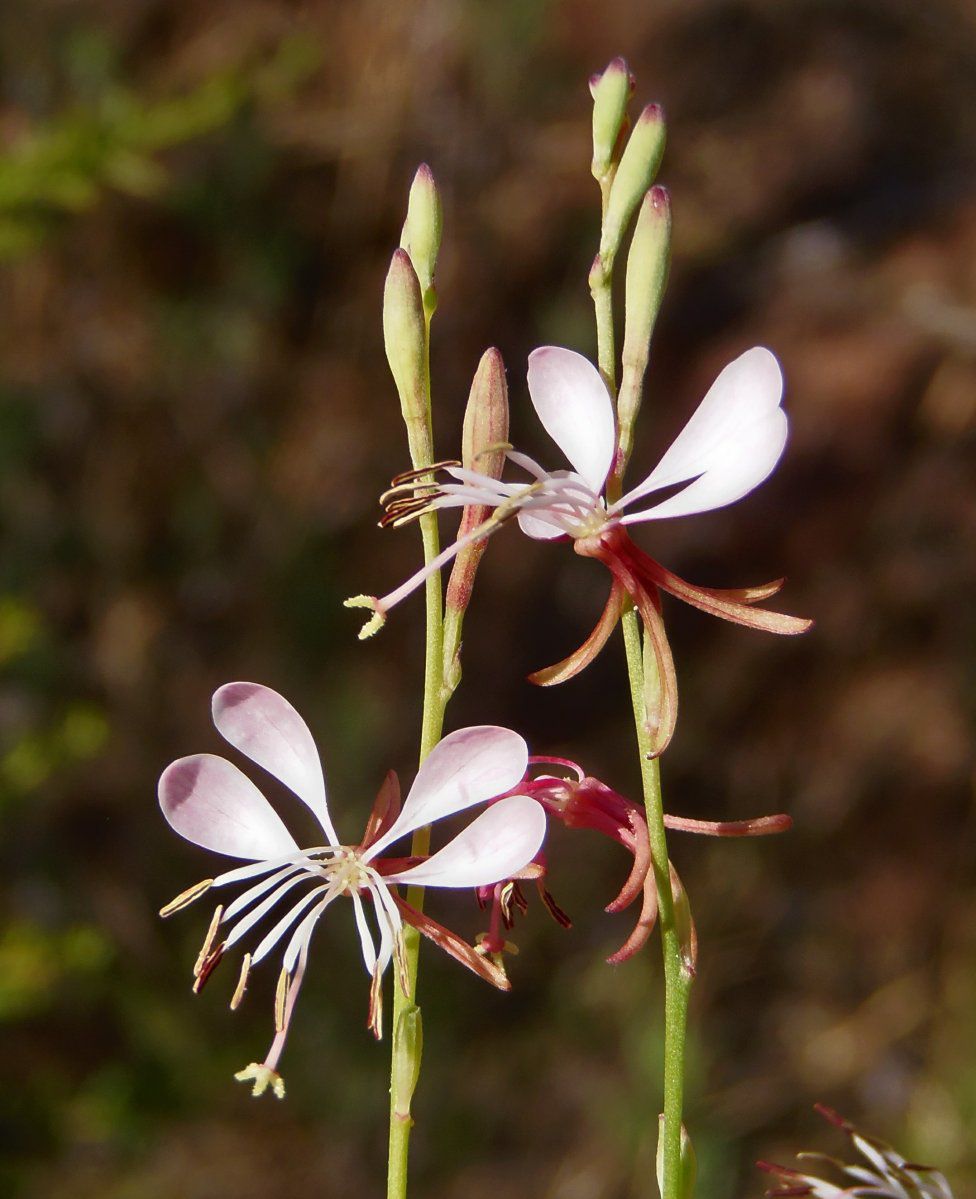
Oenothera hispida forms dense rhizomatous mats and has been referred to as spreading. While the vegetative material is quite low (<50cm), these dense mats are what are very easily a threat to local biodiversity. Verified photos on iNaturalist and CalPhotos show dense mats of this species in disturbed areas.
Wagner, Warren L. 2017. “Oenothera Xenogaura”. Jepson EFlora. Jepson Flora Project (eds.). https://ucjeps.berkeley.edu/eflora/eflora_display.php?tid=89232.
Raven, Peter H., and David Gregory. 1972. “A Revision of the Genus Gaura (onagraceae)”. Memoirs of the Torrey Botanical Club 23. Torrey Botanical Society: 1-96. https://www.jstor.org/stable/43390647.
2026. “Oenothera Hispida (Drummond S Beeblossom)”. INaturalist. https://www.inaturalist.org/taxa/545863-Oenothera-hispida.
“CalPhotos”. 2026. https://calphotos.berkeley.edu/cgi-bin/img_query?rel-taxon=begins%20wit….
2026. “Observation of Oenothera Hispida by Silversea_starsong”. https://www.inaturalist.org/observations/291155503.
2026. “Oenothera Xenogaura; Scented Gaura - CalPhotos Photo Database”. https://calphotos.berkeley.edu/cgi/img_query?enlarge=0175+3301+2284+0029.
8. Question 8
No
0
Medium
I was unable to find any evidence online or in literature that this species has any response to fire or alters fire regimes. Other members of the Oenothera genus are known to follow fire; one study shows that O. glazioviana germination is stimulated by heat and smoke.
It could be argued that a species that forms dense mats and is found primarily within disturbed habitats could provide more fuels on a landscape that may be prone to natural fire regimes, and thus could contribute to a hotter fire in a landscape where fire generally travels low and fast, however I was unable to substantiate this hypothesis for this species.
While this species can technically add additional fuels to fire prone habitats in California, it is unlikely to be significant due to the size and stature of the species, and thus unlikely to change fire regimes.
It could be argued that a species that forms dense mats and is found primarily within disturbed habitats could provide more fuels on a landscape that may be prone to natural fire regimes, and thus could contribute to a hotter fire in a landscape where fire generally travels low and fast, however I was unable to substantiate this hypothesis for this species.
While this species can technically add additional fuels to fire prone habitats in California, it is unlikely to be significant due to the size and stature of the species, and thus unlikely to change fire regimes.
Keeley, Jon. 2000. “Fire and Invasive Species in Mediterranean-Climate Ecosystems of California”. In Invasive Species Workshop. https://www.researchgate.net/profile/Jon-Keeley/publication/254993533_F….
Riveiro, Sheila. 2019. “Fire Effects on Germination Response of the Native Species Daucus Carota and the Invasive Alien Species Helichrysum Foetidum and Oenothera Glazioviana”. Global Ecology and Conservation 20: e00730. doi:10.1016/j.gecco.2019.e00730.
Underwood, Emma C., Robert C. Klinger, and Matthew L. Brooks. 2019. “Effects of Invasive Plants on Fire Regimes and Postfire Vegetation Diversity in an Arid Ecosystem”. Ecology and Evolution 9: 12421-35. doi:10.1002/ece3.5650.
Wagner, Warren L. 2017. “Oenothera Xenogaura”. Jepson EFlora. Jepson Flora Project (eds.). https://ucjeps.berkeley.edu/eflora/eflora_display.php?tid=89232.
Wragg, Peter D., Troy Mielke, and David Tilman. 2018. “Forbs, Grasses, and Grassland Fire Behaviour”. Journal of Ecology 106: 1983-2001. doi:10.1111/1365-2745.12980.
2026. “Oenothera Hispida (Sweet Gaura) - Flora of the Southeastern United States”. North Carolina Botanical Garden. https://fsus.ncbg.unc.edu/main.php?pg=show-taxon-detail.php&taxonid=3787.
9. Question 9
No
0
Medium
Oenothera hispida is not listed as toxic or a risk to livestock in the USDA or Cornell databases. Members of the Oenothera genus are well known as sources for food and traditional medicine. I was unable to find definitive proof that Oenothera hispida is palatable to livestock, but it does not appear to pose a risk.
2011. “Plants Poisonous to Livestock in the Western States”. United States Department of Agriculture, Agriculture Information Bulletin Number 415.
“Plants Poisonous to Livestock - Animal Science - Cornell University”. n.d. http://poisonousplants.ansci.cornell.edu/php/plants.php?action=indiv\&byname=scientific\&keynum=49.
Peterson, Scott. 2001. “Plant Guide: Common Evening Primrose”. USDA NRCS.
2026. “Oenothera in Flora of North America”. EFloras.Org. http://efloras.org/florataxon.aspx?flora_id=1&taxon_id=122735.
10. Question 10
No
0
Very High
Oenothera is a small plant in stature, rarely reaching above 50 cm. While it creates dense rhizomatous mats, it does not create impenetrable thickets.
Wagner, Warren L. 2017. “Oenothera Xenogaura”. Jepson EFlora. Jepson Flora Project (eds.). https://ucjeps.berkeley.edu/eflora/eflora_display.php?tid=89232.
Raven, Peter H., and David Gregory. 1972. “A Revision of the Genus Gaura (onagraceae)”. Memoirs of the Torrey Botanical Club 23. Torrey Botanical Society: 1-96. https://www.jstor.org/stable/43390647.
“CalPhotos”. 2026. https://calphotos.berkeley.edu/cgi-bin/img_query?rel-taxon=begins%20wit….
2026. “Oenothera Xenogaura; Scented Gaura - CalPhotos Photo Database”. https://calphotos.berkeley.edu/cgi/img_query?enlarge=0175+3301+2284+0029.
Calflora. 2026. “‘Observation of Oenothera Xenogaura -- Calflora.’ The Calflora Database, a Non-Profit Organization”. https://www.calflora.org/entry/occdetail.html?seq_num=io157766.
11. Question 11
Yes
1
Very High
Oenothera hispida is rhizomatous; it spreads vegetatively and is described as spreading aggressively.
Wagner, Warren L. 2017. “Oenothera Xenogaura”. Jepson EFlora. Jepson Flora Project (eds.). https://ucjeps.berkeley.edu/eflora/eflora_display.php?tid=89232.
Raven, Peter H., and David Gregory. 1972. “A Revision of the Genus Gaura (onagraceae)”. Memoirs of the Torrey Botanical Club 23. Torrey Botanical Society: 1-96. https://www.jstor.org/stable/43390647.
2026. “Oenothera Hispida in Flora of North America”. EFloras.Org. http://efloras.org/florataxon.aspx?flora_id=1&taxon_id=250130317.
12. Question 12
No
0
Low
Members of the Oenothera genus can propagate from stem tip clippings, however it appears that primary reproduction for this species is rhizomatous, or sexual through pollination by moths.
While reproducing through rhizomatous appears to be a common mode of spreading where it is already established, I was unable to find evidence that show that spreading through detached fragments was a common method of reproduction, or that there was a common pressure that causes stems to detach naturally (such as habitats that flood, natural trampling, or high winds in taller species).
While reproducing through rhizomatous appears to be a common mode of spreading where it is already established, I was unable to find evidence that show that spreading through detached fragments was a common method of reproduction, or that there was a common pressure that causes stems to detach naturally (such as habitats that flood, natural trampling, or high winds in taller species).
Martínková, Jana, Jitka Klimešová, and Stanislav Mihulka. 2006. “Vegetative Regeneration of Biennial Oenothera Species After Disturbance: Field Observations and Experiment”. Flora - Morphology, Distribution, Functional Ecology of Plants 201: 287-97. doi:10.1016/j.flora.2005.08.005.
Greiner, Stephan, and Karin Köhl. 2014. “Growing Evening Primroses (Oenothera)”. Frontiers in Plant Science 5. Frontiers. doi:10.3389/fpls.2014.00038.
Stanphill, Stephen. 2013. “Propagation, Hybridization and Genetic Manipulation of Oenothera Species”. United States — Oklahoma: Oklahoma State University. https://www.proquest.com/docview/1460760307/abstract/DEF9B57A8384323PQ/1.
2023. “Oenothera Xenogaura (Drummond’s Beeblossom) Native Plants of North America”. University of Texas at Austin. https://www.wildflower.org/plants/result.php?id_plant=OEXE.
13. Question 13
No
0
Low
Oenothera hispida generally produces 2-8 seeds per capsule. This species is diploid and self-incompatible. Verified photos show this species as often having fruit. I was unable to find any indication that the fruit are more often sterile. While the species is self-incompatible, and the wide and recent distribution of the species implies that it can produce viable seed, it is not evident whether it can commonly produce viable seed, as spreading vegetatively is a common mode of reproduction.
Wagner, Warren L. 2017. “Oenothera Xenogaura”. Jepson EFlora. Jepson Flora Project (eds.). https://ucjeps.berkeley.edu/eflora/eflora_display.php?tid=89232.
“CalPhotos”. 2026. https://calphotos.berkeley.edu/cgi-bin/img_query?rel-taxon=begins%20wit….
Raven, Peter H., and David Gregory. 1972. “A Revision of the Genus Gaura (onagraceae)”. Memoirs of the Torrey Botanical Club 23. Torrey Botanical Society: 1-96. https://www.jstor.org/stable/43390647.
2026. “Oenothera Hispida (Drummond S Beeblossom)”. INaturalist. https://www.inaturalist.org/taxa/545863-Oenothera-hispida.
Krakos, Kyra, Matthew Johnson, Peter C. Hoch, Warren L. Wagner, Pu Huang, and Peter H. Raven. 2022. “Molecular Phylogenetics Reveals Multiple Transitions to Self-Compatibility in a Primary Subclade of Oenothera (Onagraceae)1”. Annals of the Missouri Botanical Garden 107. Missouri Botanical Garden Press: 405-21. doi:10.3417/2022735.
14. Question 14
No
0
Low
A dense rhizomatous mat of Oenothera hispida could easily produce >1000 seeds each year. While this species has been observed flowering at up to five months out of the year, it is unclear if a single plant can flower throughout those five months. However, individual plants appear to have multiple inflorescence in a growing season. Each inflorescence can host (conservatively) 5-20 flowers. Fruit capsules produce 2-8 seeds. An average inflorescence could produce 50-100 seeds. A dense patch easily exceeds 20 inflorescence stalks.
However, it is not evident that these fruits and seeds are all viable, and individuals are self incompatible. While it is very likely that this plant can produce copious seeds each year, I cannot justify a 'yes' answer without knowing if they are viable seeds.
However, it is not evident that these fruits and seeds are all viable, and individuals are self incompatible. While it is very likely that this plant can produce copious seeds each year, I cannot justify a 'yes' answer without knowing if they are viable seeds.
“CalPhotos”. 2026. https://calphotos.berkeley.edu/cgi-bin/img_query?rel-taxon=begins%20wit….
2026. “Oenothera Hispida in Flora of North America”. EFloras.Org. http://efloras.org/florataxon.aspx?flora_id=1&taxon_id=250130317.
2026. “Oenothera Hispida (Drummond S Beeblossom)”. INaturalist. https://www.inaturalist.org/taxa/545863-Oenothera-hispida.
Raven, Peter H., and David Gregory. 1972. “A Revision of the Genus Gaura (onagraceae)”. Memoirs of the Torrey Botanical Club 23. Torrey Botanical Society: 1-96. https://www.jstor.org/stable/43390647.
Wagner, Warren L. 2017. “Oenothera Xenogaura”. Jepson EFlora. Jepson Flora Project (eds.). https://ucjeps.berkeley.edu/eflora/eflora_display.php?tid=89232.
Krakos, Kyra, Matthew Johnson, Peter C. Hoch, Warren L. Wagner, Pu Huang, and Peter H. Raven. 2022. “Molecular Phylogenetics Reveals Multiple Transitions to Self-Compatibility in a Primary Subclade of Oenothera (Onagraceae)1”. Annals of the Missouri Botanical Garden 107. Missouri Botanical Garden Press: 405-21. doi:10.3417/2022735.
15. Question 15
Yes
1
Medium
I was unable to find available literature specifically on Oenothera hispida to support answering 'Yes' to this question, however the following evidence shows that O. hispida could likely have a >25% germination rate without infrequent conditions.
One study on germination traits of Oenothera glazioviana, a similar and closely related species, found that 94% of fresh seeds were able to germinate in lab conditions.
Another study found that, also in a lab setting, about 90% of seeds of Oenothera biennis germinated within two weeks after sowing. Seeds were kept for about three months in paper bags before sowing.
One study on germination traits of Oenothera glazioviana, a similar and closely related species, found that 94% of fresh seeds were able to germinate in lab conditions.
Another study found that, also in a lab setting, about 90% of seeds of Oenothera biennis germinated within two weeks after sowing. Seeds were kept for about three months in paper bags before sowing.
Kachi, Naoki. 1990. “Germination Traits and Seed‐bank Dynamics of a Biennial Plant, Oenothera Glazioviana Micheli” 5. Ecological Research: 185-94. doi:10.1007/BF02346990.
Gross, Katherine, and Marleen Kromer. 1986. “Seed Weight Effects on Growth and Reproduction in Oenothera Biennis L”. Bulletin of the Torrey Botanical Club 113. Torrey Botanical Society: 252-58. http://www.jstor.org/stable/2996364.
16. Question 16
Yes
1
Medium
Oenothera hispida is fast growing, based on observational inferences it appears to produce some seed within three years of germination. Horticultural Oenothera, such as O. speciosa and O. biennis, generally germinate within 10-30 days and usually start flowering in their second year. Both of these Oenothera are also rhizomatous perennial herbs.
“Evening Primrose Seeds - Native Biennial Wildflower (Oenothera Biennis)”. 2026. NativeFloraSeeds.Org. https://nativefloraseeds.org/products/evening-primrose.
Wagner, Warren L. 2017. “Oenothera Speciosa”. Jepson EFlora. Jepson Flora Project (eds.). https://ucjeps.berkeley.edu/eflora/eflora_display.php?tid=35050.
“Showy Evening Pink Primrose Seeds Oenothera Speciosa”. 2024. EverwildeFarms.Com. https://www.everwilde.com/store/Oenothera-speciosa-WildFlower-Seed.html.
Wagner, Warren L. 2017. “Oenothera Biennis”. Jepson EFlora. Jepson Flora Project (eds.). https://ucjeps.berkeley.edu/eflora/eflora_display.php?tid=34975.
2026. “Oenothera Xenogaura - Calflora”. https://www.calflora.org/app/taxon?crn=11890.
2026. “Oenothera Hispida (Drummond S Beeblossom)”. INaturalist. https://www.inaturalist.org/taxa/545863-Oenothera-hispida.
17. Question 17
Yes
1
Medium
Photo evidence and community sourced documentation show that regionally local populations are flowering 3-4 months out of the year and support that Oenothera hispida can produce seed for that period of time.
calphotos
inaturalist
calphotos
inaturalist
Wagner, Warren L. 2017. “Oenothera Xenogaura”. Jepson EFlora. Jepson Flora Project (eds.). https://ucjeps.berkeley.edu/eflora/eflora_display.php?tid=89232.
“CalPhotos”. 2026. https://calphotos.berkeley.edu/cgi-bin/img_query?rel-taxon=begins%20wit….
2026. “Oenothera Hispida (Drummond S Beeblossom)”. INaturalist. https://www.inaturalist.org/taxa/545863-Oenothera-hispida.
18. Question 18
No
0
Medium
There is no evidence that animals are a frequent mode of dispersal for Oenothera hispida. The seeds are very small (about 2mm), and neither the fruit capsule nor seed have characteristics common to animal dispersed species, such as barbs or fleshy fruit.
2026. “Oenothera Hispida in Flora of North America”. EFloras.Org. http://efloras.org/florataxon.aspx?flora_id=1&taxon_id=250130317.
Wagner, Warren L. 2017. “Oenothera Xenogaura”. Jepson EFlora. Jepson Flora Project (eds.). https://ucjeps.berkeley.edu/eflora/eflora_display.php?tid=89232.
Raven, Peter H., and David Gregory. 1972. “A Revision of the Genus Gaura (onagraceae)”. Memoirs of the Torrey Botanical Club 23. Torrey Botanical Society: 1-96. https://www.jstor.org/stable/43390647.
19. Question 19
Yes
1
High
Members of Oenothera that share similar seed traits to Oenothera hispida are generally dispersed long distances by wind, as the seeds are light and small. One study shows that the closely related Oenothera drummondii is dispersed over great distances by seawater, however this species is mostly associated with grasslands and prairies, and its primary mode of dispersal would be wind.
2026. “Oenothera Hispida (Sweet Gaura) - Flora of the Southeastern United States”. North Carolina Botanical Garden. https://fsus.ncbg.unc.edu/main.php?pg=show-taxon-detail.php&taxonid=3787.
Wagner, Warren L. 2017. “Oenothera Xenogaura”. Jepson EFlora. Jepson Flora Project (eds.). https://ucjeps.berkeley.edu/eflora/eflora_display.php?tid=89232.
Raven, Peter H., and David Gregory. 1972. “A Revision of the Genus Gaura (onagraceae)”. Memoirs of the Torrey Botanical Club 23. Torrey Botanical Society: 1-96. https://www.jstor.org/stable/43390647.
Gallego-Fernández, Juan, Luisa Martínez, José García-Franco, and María Zunzunegui. 2021. “Multiple Seed Dispersal Modes of an Invasive Plant Species on Coastal Dunes”. Biological Invasions 23: 111-27. doi:10.1007/s10530-020-02359-6.
Steckel, Lawrence E., Lynn M. Sosnoskie, and Sandra J. Steckel. (2019) 2019. “Common Evening-Primrose (Oenothera Biennis L.)”. Weed Technology 33 (5). doi:10.1017/wet.2019.53.
20. Question 20
No
0
Low
This species is found in disturbed sandy soils throughout agricultural areas. The seeds are very small. It is possible that seeds are through contaminated equipment, soil, or clothing, it is unknown if they are frequently dispersed in this manner. Thus, I did not find evidence in the literature to support answering 'Yes' for Oenothera hispida.
Search, Wildflower. 2026. “Oenothera Hispida - Drummond’s Beeblossom”. https://wildflowersearch.org/search?&tsn=836001.
Wagner, Warren L. 2017. “Oenothera Xenogaura”. Jepson EFlora. Jepson Flora Project (eds.). https://ucjeps.berkeley.edu/eflora/eflora_display.php?tid=89232.
Raven, Peter H., and David Gregory. 1972. “A Revision of the Genus Gaura (onagraceae)”. Memoirs of the Torrey Botanical Club 23. Torrey Botanical Society: 1-96. https://www.jstor.org/stable/43390647.
Total PRE Score
15
20
68